The right device
- Use a digital upper-arm monitor, automatic and clinically validated. Reputable brands state on the packaging whether the model is validated.
- Avoid wrist and finger devices: they're far more sensitive to position and often give wrong readings.
- The cuff must fit your arm. Too tight, and it reads falsely high; if it's loose or your arm is large, ask for a large-size cuff.
- Bring your device to the office once a year: we compare it against the office monitor to confirm it measures accurately.
Before measuring
Preparation matters as much as the device. Caffeine, exercise, food, and stress raise blood pressure temporarily and distort the reading.
- Rest seated and quiet for 5 minutes before measuring.
- No caffeine (coffee, cola, energy drinks), smoking, or exercise in the previous 30 minutes.
- Don't measure after a heavy meal or during stress, anger, or pain: the number will come out high and won't reflect your usual pressure.
- Use the bathroom first: a full bladder raises blood pressure.
- Measure before taking your morning medications and before breakfast.
The correct posture
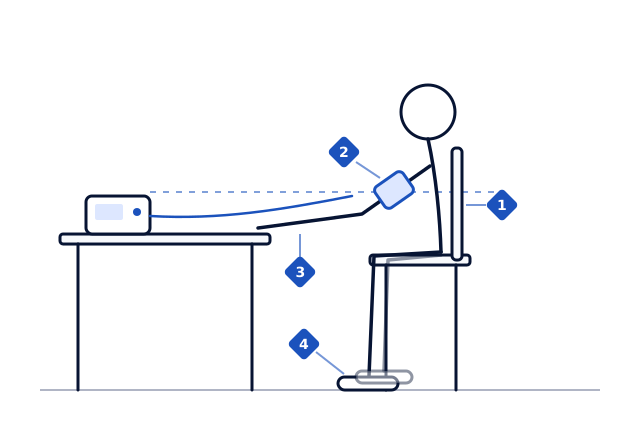
- Seated in a chair with a backrest, back supported.
- Both feet flat on the floor, legs uncrossed.
- Arm resting on a table, with the cuff at heart level.
- Cuff on bare skin, not over clothing.
- No talking or looking at your phone during the reading. Chatting can raise the number by up to 10 points.
How many readings, and when
- Take two readings in the morning and two at night, 1 minute apart.
- Ideally, measure this way for 7 days in a row before your appointment.
- If the two readings differ a lot, take a third and write down all three.
- Don't measure "constantly" when you feel unwell: a single reading under stress or pain doesn't reflect your usual pressure and only creates anxiety.
How to log your readings
In a notebook or on your phone, write down for each reading:
- Date and time.
- Both numbers (for example, 132/84) and your pulse.
- Anything unusual: a bad night's sleep, a missed dose, feeling unwell.
Bring the full log to your appointment. Those numbers determine whether your treatment is working or needs adjusting; without them, decisions are made blind.
The mistakes that most distort readings
- Measuring right after arriving home, without resting first.
- A wrist cuff, or an arm cuff that's misplaced or the wrong size.
- Arm hanging down or below heart level: it can inflate the number.
- Crossed legs, talking during the reading, a full bladder.
- Keeping only the first reading: it's almost always the highest.
- Rounding down or "forgetting" high numbers when logging. The log only works if it's honest.
When should you see a doctor?
Book an appointment if you notice any of these:
- Your home average is 135/85 or higher repeatedly, even if you feel fine.
- Your usual numbers changed without explanation.
- You already take medication and your readings remain high.
Go to the emergency room (don't wait for an appointment) if your reading is 180/120 or higher along with chest pain, shortness of breath, severe headache, vision changes, or weakness in any part of the body. A well-kept log is half the diagnosis. The other half — interpreting it and turning it into a treatment plan — is your doctor's job.

This guide is informational and does not replace a medical evaluation. If your symptoms are severe or worsening, seek care immediately.